

How Does BrokerNetwork Simplify Ground to Acre Calculation?
ground to acre If you have ever explored land or plot deals in South India, you have certainly come across the word “ground.” A seller in Chennai quotes a plot as two grounds, a developer markets a layout in grounds, and an investor from Hyderabad or Bangalore immediately asks the obvious question: how much is that in acres? This is where the ground to acre conversion becomes essential, and where most people stumble, because the ground is one of the least understood land units outside Tamil Nadu. At Broker Network, we handle property transactions across regions and unit systems every day, and we have made it our job to remove every ounce of confusion from land measurement. In this complete guide, we at Broker Network will explain what a ground is, the exact ground to acre formula, ready conversion values, real-world examples, common mistakes, and how Broker Network simplifies ground to acre calculation for buyers, sellers, and brokers alike.
What is a Ground? The Classic South Indian Land Unit
A ground is a traditional unit of land measurement used predominantly in Tamil Nadu, especially in Chennai and its surrounding districts, and familiar across parts of South India. One ground is defined as 2,400 square feet. In other units, one ground equals 266.67 square yards or approximately 222.97 square meters. Historically, a ground represented a convenient residential plot size, and even today, plot dimensions like 40 feet by 60 feet, which is exactly 2,400 square feet, are described simply as one ground.
When clients bring us listings or documents from Chennai, our team at Broker Network sees areas expressed in grounds constantly: house plots of one or two grounds, larger properties of five or ten grounds, and institutional parcels described in dozens of grounds. The moment such a property needs to be compared with land elsewhere, priced for an outside investor, or assessed by a bank, the ground to acre conversion becomes the first and most important calculation in the file.
What is an Acre? The Benchmark Unit for Land Value
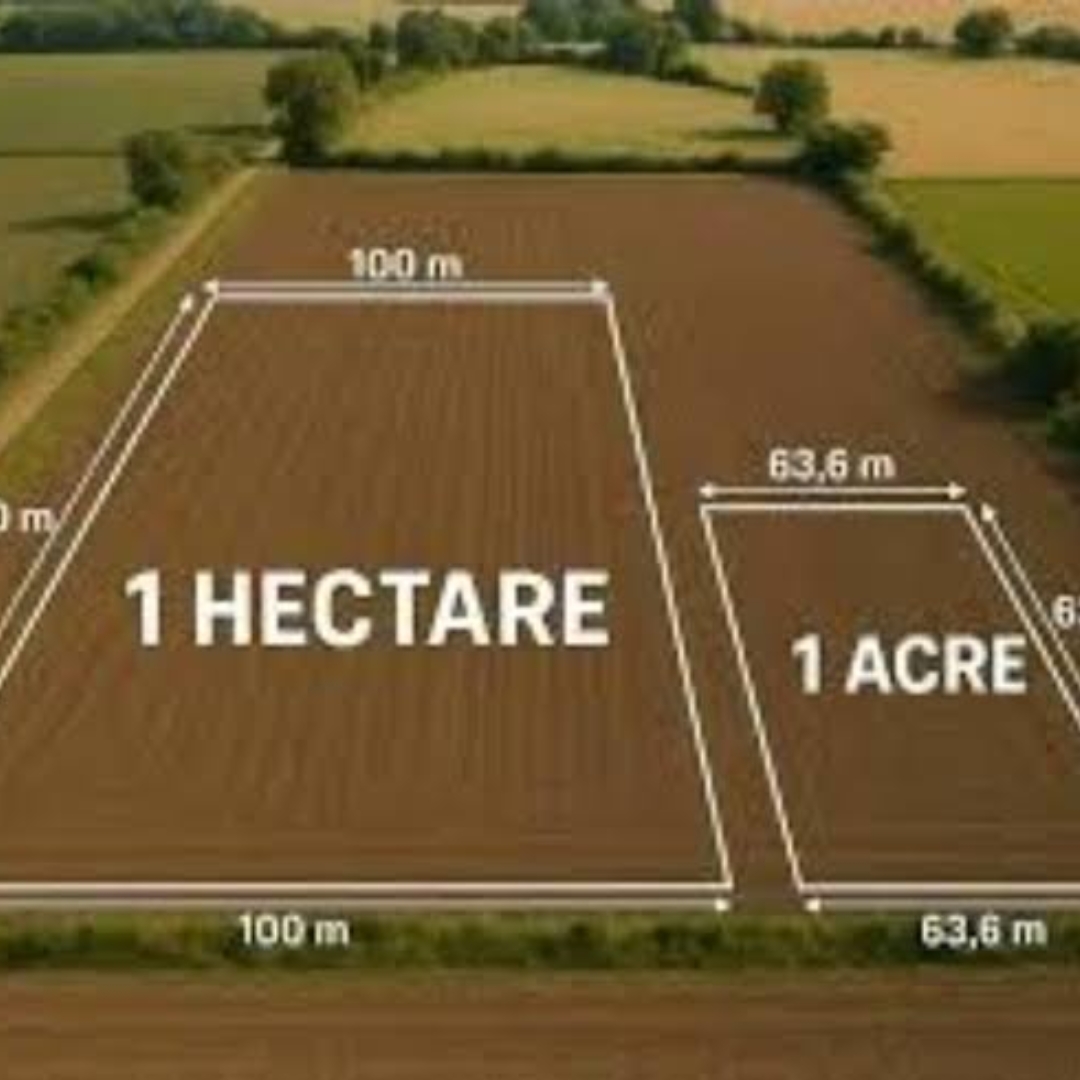
The acre is the global benchmark for land measurement. One acre equals 43,560 square feet, 4,840 square yards, or about 4,046.86 square meters. In India, agricultural land, farm plots, large development parcels, and institutional acquisitions are all priced and discussed per acre. Banks, valuers, government acquisition notices, and serious investors all speak the language of acres.
So when a Chennai property described in grounds meets an investor who thinks in acres, somebody must translate, and that translation is the ground to acre conversion. The party who can do it quickly and correctly controls the conversation. We at Broker Network believe that party should always be you, our client, and that is exactly why we have written this guide and built conversion clarity into every Broker Network listing.
The Exact Ground to Acre Conversion Formula
Here is the heart of the matter. Since one ground is 2,400 square feet and one acre is 43,560 square feet, the ground to acre conversion is:
Acres = Number of Grounds × 2,400 ÷ 43,560, which simplifies to Acres = Grounds × 0.0551 approximately.
In other words, one ground equals approximately 0.0551 acre. Looking at it from the other side, one acre contains 43,560 ÷ 2,400 = 18.15 grounds. This second figure is often the more useful one to memorise: one acre is 18.15 grounds. So when a seller offers you 18 grounds, you immediately know you are looking at just under one acre of land. We at Broker Network use these exact values, 0.0551 acre per ground and 18.15 grounds per acre, in all our verified calculations, and every ground to acre figure on a Broker Network listing is computed from this standard definition of a 2,400 square feet ground.
Ready Ground to Acre Conversion Values You Should Keep Handy
Here are the ground to acre conversions for the sizes that appear most often in real transactions. 1 ground equals 0.0551 acre. 2 grounds equal 0.1102 acre. 3 grounds equal 0.1653 acre. 4 grounds equal 0.2204 acre. 5 grounds equal 0.2755 acre. 6 grounds equal 0.3306 acre. 8 grounds equal 0.4408 acre. 10 grounds equal 0.5510 acre. 12 grounds equal 0.6612 acre. 15 grounds equal 0.8264 acre. 18 grounds equal 0.9917 acre, almost exactly one acre. 18.15 grounds equal exactly 1 acre. 20 grounds equal 1.1019 acres. 36.3 grounds equal 2 acres. 90.75 grounds equal 5 acres.
We at Broker Network recommend memorising just two anchors from this list: one ground is roughly 0.055 acre, and one acre is 18.15 grounds. With these two anchors, you can estimate any ground to acre conversion in your head during a site visit and verify it precisely on paper afterwards.
Reverse Calculation: Acre to Ground Made Easy
The reverse of the ground to acre conversion is just as important, especially for investors who start from an acre-based requirement. The formula is: Grounds = Acres × 18.15. So half an acre is 9.075 grounds, one acre is 18.15 grounds, two acres are 36.3 grounds, and five acres are 90.75 grounds.
This reverse fluency matters in practice. An investor who tells a Chennai broker that he wants two acres will be shown properties described in grounds; knowing instantly that he should look for around 36 grounds keeps him in control of the search. On Broker Network, this work is already done: our platform displays each property’s area in grounds alongside its acre, square yard, and square feet equivalents, so every party reads the same property in their own preferred unit without doing any arithmetic at all.
Why Accurate Ground to Acre Calculation Matters So Much
Land described in grounds is usually urban or peri-urban land, and urban land is expensive. Consider a property of 10 grounds in a developing Chennai corridor where land trades at twelve crore rupees per acre. The correct ground to acre conversion gives 10 × 0.0551 = 0.551 acre, for a fair value of about 6.61 crore rupees. Now suppose someone casually treats 10 grounds as half an acre flat; the estimated value drops to 6 crore rupees, an error of over sixty lakh rupees created purely by sloppy conversion.
Beyond pricing, the ground to acre conversion drives stamp duty calculations at registration, bank loan valuations, joint development negotiations where landowner shares are computed on area, and feasibility studies where builders compute how many units fit on a parcel. An error at the conversion stage silently corrupts every one of these downstream calculations. We at Broker Network treat the ground to acre figure as the foundation stone of a South Indian land deal, and we verify it before anything else is discussed.
Step-by-Step: The Broker Network Method for Ground to Acre Calculation
Here is the exact method we follow at Broker Network, and the one we teach every client. Step 1: Take the area from official documents, the sale deed, patta, or FMB sketch, never from a brochure or a verbal description. Step 2: Confirm that the ground used is the standard 2,400 square feet ground; in a few older localities, slightly different ground values have historically been used, and the document or the FMB measurements will reveal this. Step 3: Convert grounds to square feet by multiplying by 2,400. Step 4: Divide by 43,560 to get acres; this two-step route through square feet is the most reliable way to do a ground to acre conversion because it exposes any unusual ground value immediately. Step 5: Cross-check with the direct multiplier of 0.0551 acre per ground; both routes must agree. Step 6: For any high-value purchase, commission a licensed surveyor so the physical measurement matches the documented ground to acre figure.
For example, a property of 7.5 grounds converts as follows: 7.5 × 2,400 = 18,000 square feet, and 18,000 ÷ 43,560 = 0.4132 acre. The direct check, 7.5 × 0.0551 = 0.4132 acre, confirms it. Two minutes of work, complete certainty.
Common Mistakes in Ground to Acre Conversion and How We Prevent Them
The first mistake is rounding the ground to acre multiplier too aggressively, using 0.05 instead of 0.0551; on a 20 ground property that understates the land by more than 870 square feet. The second mistake is assuming every ground is 2,400 square feet without checking the document; verify, then convert. The third mistake is confusing the ground with the cent, another South Indian unit; one cent is 435.6 square feet, so one ground is about 5.51 cents, and mixing the two units wrecks the entire calculation. The fourth mistake is comparing a price per ground in one locality with a price per acre in another without normalising the units first. The fifth mistake is trusting anonymous online calculators whose assumptions you cannot see.
At Broker Network, our verification process is designed to catch every one of these errors before they reach you. Every area figure on a Broker Network listing has been taken from documents, converted using standard values, cross-checked through square feet, and displayed in multiple units. When you see a ground to acre figure on Broker Network, you can rely on it.
How BrokerNetwork Simplifies Ground to Acre Calculation for Everyone
Simplification is the core promise of Broker Network. For buyers, every Broker Network listing shows the property’s area in grounds, acres, square yards, square feet, and square meters simultaneously, so the ground to acre conversion is already done, verified, and displayed before you even enquire. For sellers, Broker Network presents your property professionally to outside investors who think in acres, widening your buyer pool beyond the local market. For brokers, Broker Network removes the risk of quoting a wrong figure, because the platform’s standardised data backs every conversation you have with a client.
Beyond conversions, we at Broker Network verify ownership documents, assist with encumbrance checks, support fair price discovery using normalised per-unit rates, and connect all parties with surveyors, legal experts, and registration support. Our goal at Broker Network is that no deal should ever slow down, and no client should ever lose money, because of a measurement question. The ground to acre calculation is just one of the many frictions we have engineered out of the property transaction.
Ground to Acre in Investment Analysis: A Practical Lens
Sophisticated investors use the ground to acre conversion to spot value that others miss. Because local markets quote in grounds while institutional benchmarks quote in acres, the same land can look cheap in one unit and expensive in another to an untrained eye. Convert everything to a single unit, and the truth appears. A plot at one crore rupees per ground equals approximately 18.15 crore rupees per acre; an outlying parcel at fifteen crore rupees per acre equals about 82.6 lakh rupees per ground. Suddenly the two properties can be compared honestly.
We at Broker Network encourage every investor to build this habit: normalise first, compare second, decide third. And when you search on Broker Network, the normalisation is already on the screen, letting you focus your energy on location, legality, and growth potential, the factors that actually create returns.
Ground to Acre and the Wider Family of South Indian Land Units
To work confidently in South Indian real estate, place the ground to acre relationship inside the complete local unit family. One ground equals 2,400 square feet, 266.67 square yards, approximately 222.97 square meters, about 5.51 cents, and approximately 0.0551 acre. The cent, the other workhorse unit of the South, equals 435.6 square feet, and 100 cents make exactly one acre; that is why one ground, at 2,400 ÷ 435.6 = 5.51 cents, slots so neatly into the system. In Telangana and Andhra Pradesh, where plots are quoted in square yards (gajams), one ground translates to 266.67 gajams, and one acre to 4,840 gajams.
This wider map matters because South Indian deals constantly cross unit boundaries: a Chennai seller quotes grounds, a Coimbatore farm quotes cents, a Hyderabad layout quotes square yards, and an institutional buyer evaluates everything in acres. The professional who can move fluently between all of them, with the ground to acre conversion as the central bridge, reads every market clearly. Broker Network listings carry this complete unit map on every property, so our users never have to reconstruct it deal by deal.
A Real-World Ground to Acre Walkthrough From Enquiry to Decision
Let us finish with a complete worked example of the kind we at Broker Network process routinely. An NRI investor based in Hyderabad receives an offer for a Chennai property described as 12 grounds at a lump-sum price of 9 crore rupees, and wants to know whether the deal is fair against the corridor’s benchmark of around 14 crore rupees per acre. Step one, convert to square feet: 12 × 2,400 = 28,800 square feet. Step two, the ground to acre conversion: 28,800 ÷ 43,560 = 0.6612 acre. Step three, the cross-check with the direct multiplier: 12 × 0.0551 = 0.6612 acre, confirmed.
Step four, the valuation: 0.6612 × 14 crore = approximately 9.26 crore rupees. The asking price of 9 crore rupees is therefore slightly below the benchmark, signalling a genuinely fair deal worth pursuing quickly. The investor proceeds to document verification and survey, both coordinated through Broker Network, and closes with complete confidence. Notice that the entire investment judgment hinged on one number, the 0.6612 acre produced by an accurate ground to acre conversion. Get that number right and every decision downstream stands on solid ground; get it wrong and even a good deal turns into a gamble. This is precisely why Broker Network verifies it first, every single time.
The Broker Network Quick Checklist for Every Ground to Acre Calculation
Before you rely on any ground to acre figure in a negotiation, agreement, or investment model, run through this Broker Network checklist. One, is the area taken from the sale deed, patta, or FMB sketch rather than a marketing brochure? Two, have you confirmed that the ground in question is the standard 2,400 square feet ground? Three, have you converted grounds to square feet first and then divided by 43,560, instead of using a rounded shortcut? Four, does the direct multiplier of 0.0551 acre per ground confirm the same answer? Five, have you avoided mixing up grounds with cents in any part of the calculation? Six, for a high-value purchase, is a licensed survey scheduled before the final payment?
Six yes answers mean your ground to acre calculation is verified and ready to support real decisions. Any no is an instruction to stop and complete that step, because every shortcut skipped at the calculation stage returns as a dispute at the registration stage. Clients who adopt this checklist tell us at Broker Network that it transformed their confidence in South Indian land deals; the numbers stopped being a source of anxiety and became a source of advantage. That transformation, multiplied across thousands of users, is exactly what Broker Network was built to create.
Frequently Asked Questions (FAQs)
1. How many acres is one ground?
One ground equals approximately 0.0551 acre. This comes from the definition of a ground as 2,400 square feet and an acre as 43,560 square feet, since 2,400 ÷ 43,560 = 0.0551. Equivalently, one acre contains 18.15 grounds. Every ground to acre figure on Broker Network is calculated from these standard values.
2. What is the formula for ground to acre conversion?
The ground to acre formula is: Acres = Grounds × 2,400 ÷ 43,560, which simplifies to Acres = Grounds × 0.0551. The safest method is the two-step route: multiply grounds by 2,400 to get square feet, then divide by 43,560 to get acres. We at Broker Network always cross-check both routes for every verified listing.
3. How many grounds make one acre?
One acre contains 18.15 grounds, because 43,560 ÷ 2,400 = 18.15. So a property of around 18 grounds is just under an acre, and 36 grounds is just under two acres. This single anchor figure makes mental ground to acre conversion easy during site visits, and Broker Network displays the precise converted values on every listing.
4. Is the ground used outside Tamil Nadu, and does its value change?
The ground is primarily a Tamil Nadu unit, strongest in Chennai and surrounding districts, though it is recognised across South Indian real estate circles. The standard modern value is 2,400 square feet per ground, but a few older localities have historically used slightly different values, which is why we at Broker Network always verify the ground value from the actual documents and FMB measurements before performing the ground to acre conversion.
5. How does Broker Network help me with land measurement and verification?
Broker Network verifies the area from official documents, confirms the unit convention, performs the ground to acre conversion along with square yard and square feet equivalents, and displays all figures transparently on the listing. We also support document verification, fair price discovery, and physical surveys for high-value deals. With Broker Network, you transact on verified numbers, not assumptions.
Conclusion
The ground to acre conversion sits at the meeting point of South India’s traditional land culture and the modern, acre-based investment world. Master the two anchor facts, one ground equals 0.0551 acre and one acre equals 18.15 grounds, follow the two-step conversion through square feet, verify the ground value from documents, and confirm high-value deals with a physical survey. Do this, and the ground to acre calculation will never confuse, delay, or cost you anything again.
And for everything that surrounds the calculation, the verification, the pricing, the documentation, and the connections that turn an enquiry into a closed deal, we at Broker Network are with you. Broker Network simplifies ground to acre calculation by doing the hard work before you arrive: verified documents, standardised conversions, transparent listings, and trusted professional support at every step. Whether you are buying your first plot in Chennai, selling a family property described in grounds, or evaluating acres of land for investment, make Broker Network your starting point, and let every number in your deal carry the confidence of verification. Close more, together, with Broker Network.
For More Follow Us On : Instagram